Fundamentals
What Is an Optical Brightening Agent and How Does It Work?
What is an optical brightening agent (OBA)? How fluorescent whitening agents absorb UV and emit blue light, and how they differ from bleaching.
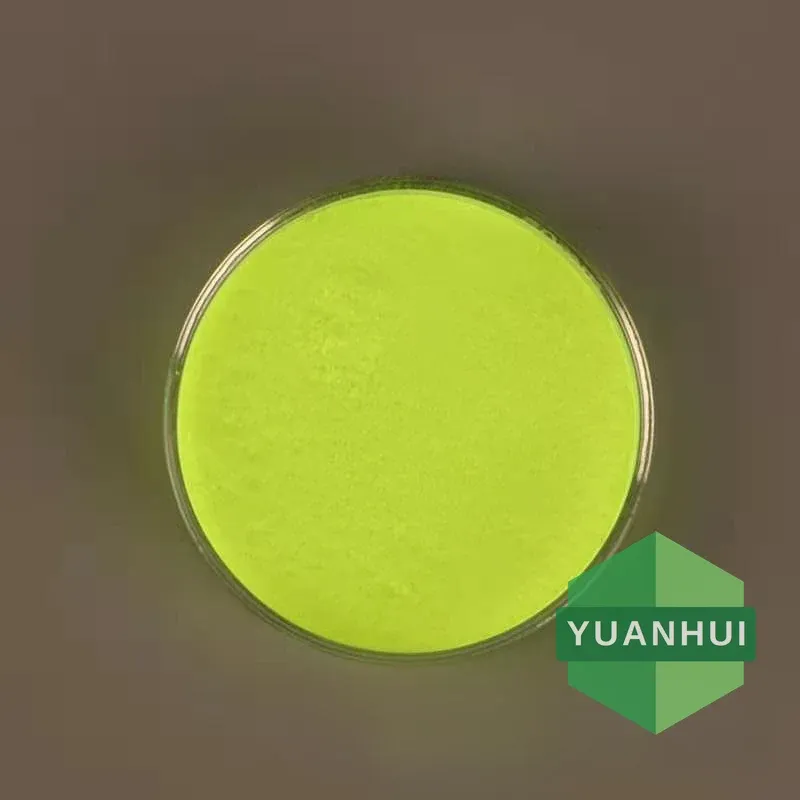
A plain-language explanation of fluorescent whitening agents, UV light, blue fluorescence and why whiteness is not the same as bleaching.
Short answer
An optical brightening agent (OBA), also called a fluorescent whitening agent or optical brightener, is a compound that absorbs invisible ultraviolet light and re-emits it as visible blue-violet light. The added blue light compensates for the yellow cast that many materials develop, so the material looks whiter and brighter without bleaching or removing anything from it.
Why materials look yellow in the first place
Polymers, cellulose fibres and many pigments absorb a little blue light. What is left over is slightly yellow to the eye, even when the material is clean and undamaged. Ageing, heat and light exposure can increase the effect by forming new light-absorbing groups in the material.
What this means in practice
Because the effect depends on UV, the same white fabric or plastic part can look different under daylight, shop lighting and warehouse lighting. Whiteness is therefore a property of the material plus its lighting, not of the material alone. That is why OBAs are specified alongside a test illuminant rather than on their own.
Where OBAs are used
Fluorescent whitening agents appear in textile finishing, plastics compounding and masterbatch, paper and pulp, and detergents. In each case the aim is the same: improve perceived whiteness without changing the base colour of the product.
How to specify one
A useful enquiry states the substrate, processing temperature and pH, target whiteness index, regulatory requirements, and whether the product will be seen mainly under daylight or artificial light. With that information a supplier can recommend an OBA chemistry and a dosage range, and confirm migration and light-fastness behaviour.
Questions & answers
Is an optical brightener the same as bleach?
No. Bleaching chemically removes or decolourises chromophores in the material. An optical brightener leaves the material chemically intact and adds blue-violet fluorescence that offsets the yellow cast. The two are often used together in textile and paper processes.
Why does my white product look different under shop lighting?
Fluorescent whitening needs ultraviolet light to activate. Light sources with little UV output produce a weaker brightening effect, so the same material can appear less white. Evaluate whiteness under a consistent, specified light source.
Related products: OB-1, OB, KCB, FP-127.